

Guida rapida alle traduzioni giurate
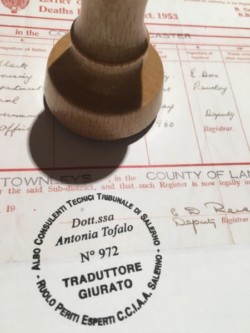 Nel corso degli ultimi anni la traduzione giurata (o asseverata) ha assunto un ruolo sempre più importante a seguito dell’esplosione del commercio internazionale e dell’incremento dei flussi migratori. La conseguenza è stata un forte aumento nella richiesta di questo tipo di servizio.
L’asseverazione di una traduzione di un documento è una procedura certificativa, ad opera di un traduttore iscritto all’albo dei CTU del Tribunale, attraverso la quale si attribuisce valore legale al documento. È un processo indispensabile affinché la traduzione abbia validità nel Paese in cui deve essere utilizzata in quanto con questa procedura il documento tradotto assume lo stesso valore del documento originale.
La principale difficoltà della traduzione giuridica risiede nella divergenza, e in alcuni casi nell’assenza, dei concetti giuridici tra la lingua di partenza e la lingua di arrivo, quindi tra i due diversi sistemi giuridici in questione. Di conseguenza, la principale ragione della difficoltà della traduzione giuridica è rappresentata proprio dall’intraducibilità non dei termini, bensì di concetti che sono propri di alcuni sistemi giuridici e non di altri. Di fronte a questa situazione, il traduttore giuridico deve operare scelte importanti e di grande responsabilità, tra cui quella di creare nella propria lingua un neologismo apposito, oppure quella di adottare le convenzioni esistenti.
Le procedure di asseverazione e legalizzazione variano in base al documento in questione. È responsabilità del cliente informarsi delle esigenze specifiche presso le autorità richiedenti per quanto concerne la necessità di una traduzione giurata o certificata. I dubbi dei clienti su queste procedure sono sempre tanti. Cerchiamo quindi di capire la differenza tra i termini utilizzati. Cosa significa traduzione certificata (o autenticata), traduzione giurata (o asseverata), apostille o legalizzazione?
Cos’è una traduzione certificata?
La traduzione certificata o autenticata è spesso confusa con la traduzione giurata, ma bisogna stare attenti in quanto sono due tipi di traduzione completamente diversi. Con la traduzione certificata si attesta semplicemente la fedeltà al testo di partenza. È una traduzione rilasciata da un traduttore iscritto all’albo dei CTU del Tribunale, accompagnata da una dichiarazione su carta intestata nella quale si certifica che la traduzione è fedele e conforme al testo originale di partenza.
Alcuni paesi non richiedono la traduzione asseverata per considerare una traduzione valida a tutti gli effetti e con valore legale e ufficiale. Richiedono pertanto una certified translation o una notarized translation (appunto, traduzione certificata).
Hai bisogno di una traduzione certificata? Scrivimi a info@expertsintranslation.com o chiamami al (+39) 338 38 46 542.
Cos’è una traduzione giurata (o asseverata)?
L’asseverazione, o traduzione giurata, è un atto pubblico a carico di un traduttore iscritto all’albo dei CTU del Tribunale che presta giuramento presso l’ufficio asseverazioni e perizie del Tribunale. Con l’asseverazione il traduttore certifica, firmando un apposito verbale di asseverazione, la corrispondenza del testo tradotto a quanto presente nel testo originale. La sottoscrizione del verbale comporta per il traduttore l’assunzione ufficiale della responsabilità civile e penale relativamente alla traduzione (Normativa di riferimento: art. 5 R.D. 9 ottobre 1922, n. 1366). Con questa procedura il documento tradotto assume lo stesso valore del documento originale.
Le asseverazioni sono obbligatoriamente necessarie quando una traduzione deve essere utilizzata per scopi amministrativi, governativi o giudiziari.
Vengono generalmente asseverati documenti come:
- titolo di studio
- patente di guida nel caso di cittadini extraeuropei
- libretti di circolazioni automobilistici
- certificati di matrimonio e di divorzio
- certificati di nascita
- documenti per la richiesta della cittadinanza
- in generale qualsiasi tipo di atto giudiziario
Le procedure di asseverazione variano in base al paese in cui la traduzione viene asseverata e in base al tipo di documento. A prescindere dalle modalità con cui una traduzione è asseverata, questa avrà una validità mondiale.
In Italia una traduzione può essere asseverata seguendo 3 diverse procedure, ognuna delle quali coinvolge professionalità e situazioni diverse:
- Tribunale
- Giudice di pace
- Notaio
IMPORTANTE: NON è consentito asseverare traduzioni interlingua (cioè da una lingua straniera ad un’altra). L’unica lingua ufficiale della Repubblica Italiana è l’italiano, quindi in una traduzione giurata, almeno un testo delle tre parti che costituiscono il plico da asseverare deve essere obbligatoriamente in italiano.
Hai bisogno di una traduzione giurata? Scrivimi a info@expertsintranslation.com o chiamami al (+39) 338 38 46 542.
Cosa sono la legalizzazione o apostille?
L’asseverazione è un atto pubblico di competenza del Cancelliere. Il giurare senza la presenza del pubblico ufficiale non ha alcun significato giuridico. Se la traduzione asseverata deve essere trasmessa all’estero, è necessario legalizzare la firma del cancelliere preposto alla Procura della Repubblica presso il Tribunale.
La legalizzazione serve a certificare la provenienza degli atti e la qualifica di chi li ha firmati. Consiste nell’attestazione ufficiale (mediante apposito timbro) della qualità legale del Pubblico Ufficiale che ha apposto la propria firma su un documento, nonché dell’autenticità della firma stessa.
Tuttavia, numerose Convenzioni internazionali semplificano la procedura di legalizzazione.
Un primo esempio è rappresentato dagli stati aderenti alla Convenzione dell’Aja del 5 ottobre 1961 adottano l’apostille al posto della legalizzazione. Esattamente come la legalizzazione, l’apostille prevede un timbro speciale attestante l’autenticità del documento e la qualità legale dell’Autorità rilasciante. I Paesi firmatari della Convenzione dell’Aja sono elencati al seguente link: https://www.prefettura.it/FILES/docs/1173/Convenzione_Aja_Stato_applicazione.pdf
La Convenzione Europea di Londra del 7 giugno 1968 prevede l’esenzione da legalizzazione ad atti e documenti rilasciati dalle seguenti Ambasciate e/o Consolati aderenti alla convenzione: Austria, Grecia, Malta, Portogallo, Svezia, Cipro, Irlanda, Norvegia, Regno Unito, Svizzera, Francia, Liechtenstein, Paesi Bassi, Repubblica Ceca, Repubblica Moldova, Turchia, Germania, Lussemburgo, Polonia e Spagna.
Ai sensi della Convenzione di Bruxelles del 25 maggio 1987, convenzione ratificata dall’Italia con L. 24.4.1990, n.106, è stata soppressa fra Belgio Danimarca, Francia, Irlanda, Italia ogni forma di legalizzazione o qualsiasi altra formalità equivalente o analoga, anche nel caso in cui gli atti debbano essere esibiti alla rappresentanze consolari di Belgio, Danimarca, Francia, Irlanda e Italia operanti sul territorio di uno Stato che non ha ratificato la predetta Convenzione.
Per gli altri Stati comunitari, anche se aderenti alla Convenzione di Bruxelles, resta fermo il regime di legalizzazione, consolare o per Apostille, se aderiscono alla Convenzione dell’Aja del 5 ottobre 1961.
La Convenzione fra la Repubblica Italiana e la Repubblica Federale di Germania del 7 giugno 1969 esclude la necessità della legalizzazione per gli atti ed i documenti pubblici rilasciati da uno dei due Stati ed utilizzati nell’altro.
Hai bisogno di una legalizzazione o apostille? Scrivimi a info@expertsintranslation.com o chiamami al (+39) 338 38 46 542.
Quando è necessaria la legalizzazione o apostille?
Il documento originale (quindi, da tradurre) deve sempre essere munito di legalizzazione o apostille a seconda degli stati in cui deve essere fatto valere.
Se il documento deve essere fatto valere all’estero, una volta tradotto e asseverato, è necessario apporre la legalizzazione o apostille (a seconda dello stato in cui va consegnato il documento) anche sulla traduzione (viene certificata la firma dell’Ufficiale Giudiziario che ha firmato il verbale di giuramento del traduttore).
Qualche esempio di documenti che richiedono l’apostille: casellario giudiziale, carichi pendenti, certificati anagrafici e titoli di studio.
- per gli atti notarili e giudiziari: dalla Procura della Repubblica presso i tribunali nella cui giurisdizione gli atti medesimi sono formati.
- per gli atti amministrativi: dalla Prefettura U.T.G. territorialmente competente
In tema di traduzioni giurate, infine, la Convenzione di Bruxelles, relativa alla esenzione dall’Apostille nei rapporti tra i Paesi dell’Unione Europea, non è ancora stata ratificata da tutti i Paesi dell’Unione ed è quindi in vigore solo tra Belgio, Danimarca, Francia, Irlanda ed Italia.
RIASSUMENDO:
Procedura per i documenti provenienti dall’estero da far valere in Italia:
- Documento originale estero con legalizzazione o apostille
- Traduzione giurata
- (La legalizzazione o apostille sulla traduzione NON è necessaria)
Procedura per i documenti emessi in Italia da far valere all’estero:
- Documento originale italiano con legalizzazione o apostille
- Traduzione giurata
- Legalizzazione o apostille sulla traduzione. È necessaria doppia apostille!
NOTA: Il costo dell’asseverazione comprende anche le marche da bollo da € 16,00 che vanno apposte sulla traduzione e non sull’originale, ogni 4 facciate a partire dalla prima pagina della traduzione (anche di una riga ciascuna) e comunque ogni 100 righe (indipendentemente dal numero di pagine). Nel calcolo delle pagine va considerato anche il verbale di giuramento.
Ai sensi della legge italiana sono previsti diversi casi di esenzione da imposta di bollo, a seconda della destinazione d’uso della traduzione giurata. Alcune destinazioni d’uso che prevedono l’esenzione secondo la legge sono:
-
separazione e divorzio
-
adozione
-
lavoro e previdenza
-
cause civili per le quali sia già stato pagato il contributo unificato
-
onlus
-
lavoro
-
agraria (no fotovoltaici, no agriturismo)
In caso di esenzione dall’imposta di bollo, si dovrà indicare all’inizio dell’atto o sul verbale di giuramento gli estremi della legge che prevede l’esenzione. È possibile consultare l’Allegato B) del D.P.R. 642/1972 a questo link per le leggi che prevedono l’esenzione dall’imposta di bollo.
Quick Guide to Sworn Translations
In recent years, sworn translations have assumed an increasingly important role as a result of the explosion in international trade and the increase in migration flows. This has led to a sharp increase in demand for this type of service.
The certification of a translation of a document is a certification procedure, by a court-appointed translator, through which legal value is attributed to the document. It is an essential process for the translation to be valid in the country in which it is to be used since with this procedure the translated document takes on the same value as the original document.
The main difficulty of legal translation lies in the difference and in some cases the absence, of legal concepts between the source and target languages, i.e. between the two different legal systems in question. Consequently, the main reason for the difficulty of legal translation is the untranslatability not of terms, but of concepts which are specific to some legal systems and not to others. In such situations, the legal translator must make important and highly responsible choices, including that of creating a special neologism in his own language or that of adopting existing conventions.
The procedures for certification and legalization vary according to the document in question. It is the responsibility of the client to obtain information about the specific requirements from the requesting authorities regarding the need for a sworn or certified translation. Clients always have a lot of doubts about these procedures. Let’s try to understand the difference between the terms used. What does certified translation, sworn translation, apostille or legalization mean?
What is a certified translation?
Certified translation is often confused with sworn translation, but you should be careful as they are two completely different types of translation. With a certified translation, you can simply attest the accuracy to the source text. It is a translation issued by a court-appointed translator, accompanied by a declaration on headed paper certifying that the translation is faithful and conforms to the original source text.
Some countries do not require sworn translations to consider a translation valid for all purposes and with legal and official value. Thus, they require a certified translation or a notarized translation.
Do you need a certified translation? Write to me at info@expertsintranslation.com or call me at (+39) 338 38 46 542.
What is a sworn translation?
A sworn translation is an authentic instrument by a court-appointed translator who takes the oath at the Court of First Instance. By means of the sworn translation, the translator certifies, by signing an oath statement, that the translated text corresponds to the original text. The signing of the oath statement implies taking over the administrative responsibility for the translator of civil and criminal liability in relation to the translation (Reference legislation: Art. 5 R.D. October 9, 1922, no. 1366). With this procedure, the translated document takes on the same value as the original document. Sworn translations are required when a translation is to be used for administrative, governmental, or judicial purposes.
Sworn translations can be documents such as:
- diploma/certificates
- driving license in the case of non-European citizens
- motor vehicle registration documents
- marriage and divorce certificates
- birth certificates
- documents for applying for citizenship
- in general, any type of judicial act
The certification procedures vary according to the country in which the translation is certified and according to the type of document. Regardless of how a translation is certified, it will be globally valid.
In Italy, a translation can be certified by following 3 different procedures, each involving different professional backgrounds and situations:
- Court
- Justice of Peace
- Notary
Do you need a sworn translation? Write to me at info@expertsintranslation.com or call me at (+39) 338 38 46 542.
What are legalization and apostille?
A sworn translation is an authentic instrument within the competence of the Chancellor. Oathing without the presence of a public official has no legal significance. If the sworn translation is to be sent abroad, the signature of the Registrar of the Public Prosecutor’s Office of the Court must be legalized.
Legalization serves to certify the origin of the deeds and the qualification of the person who signed them. It consists of official certification (by means of a special stamp) of the legal status of the public official who has signed a document, as well as the authenticity of the signature itself.
However, several international conventions simplify the legalization procedure.
A first example is represented by the states adhering to the Hague Convention of October 5, 1961, adopting the apostille instead of legalization. Just like legalization, the apostille provides for a special stamp attesting to the authenticity of the document and the legal quality of the issuing authority. The signatory countries of the Hague Convention are listed at the following link: https://www.prefettura.it/FILES/docs/1173/Convenzione_Aja_Stato_applicazione.pdf
The European Convention of London of June 7, 1968, provides for the exemption from legalization of deeds and documents issued by the following consulates parties to the Convention: Austria, Greece, Malta, Portugal, Sweden, Cyprus, Ireland, Norway, Switzerland, France, Liechtenstein, the Netherlands, the Czech Republic, the Republic of Moldova, Turkey, Germany, Luxembourg, Poland, and Spain.
Under the Brussels Convention of May 25, 1987, ratified by Italy with Law No 106 of April 24, 1990, all forms of legalization or any other equivalent or similar formality have been abolished between Belgium, Denmark, France, Ireland, and Italy, even if the documents are to be produced at the consular posts of Belgium, Denmark, France, Ireland, and Italy operating in the territory of a State which has not ratified the Convention.
For the other Community States, even if they are parties to the Brussels Convention, the legalization, consular or with apostille, if they are parties to the Hague Convention of October, 5 1961, remains unaffected.
The Convention between Italy and Germany of June 7th, 1969 excludes the need for legalization for public acts and documents issued by one of the two States and used in the other.
Do you need legalization or apostille? Write to me at info@expertsintranslation.com or call me at (+39) 338 38 46 542.
When is legalization or apostille required?
The original document (therefore, to be translated) must always be provided with legalization or apostille depending on the states in which it is to be relied on. If the document is to be relied upon abroad, once it has been translated and certified, it must also be legalized or apostilled (depending on the state in which the document is to be delivered) on the translation (the signature of the judicial officer who signed the translator’s oath statement is certified).
Some examples of documents that require an apostille: criminal records, pending charges, personal data certificates, and diplomas.
- for notarial and judicial documents: by the Public Prosecutor’s Office of the courts in whose jurisdiction the documents are drawn up.
- for administrative documents: by the U.T.G. Prefecture with territorial jurisdiction
Finally, on the subject of sworn translations, the Brussels Convention, concerning the exemption from the Apostille in relations between the countries of the European Union, has not yet been ratified by all the countries of the Union and is therefore in force only between Belgium, Denmark, France, Ireland and Italy.
IN SUMMARY:
Procedure for documents from abroad to be valid in Italy:
- Original foreign document with legalization or apostille
- Sworn translation
- (Legalization or apostille on translation is NOT necessary)
Procedure for documents issued in Italy to be valid abroad:
- Original Italian document with legalization or apostille
- Sworn translation
- Legalization or apostille on the translation. Double apostille required!
IMPORTANT: It is not allowed to CERTIFY translations from one foreign language to another: the translations to be certified must necessarily pass from Italian.
The cost of a sworn translation also includes stamp duties of € 16.00 that must be affixed on the translation and not on the original document, every 4 sides from the first page of the translation (even one line each) or every 100 lines (regardless of the number of pages). In the calculation of the pages, the oath statement must also be taken into account.
Under Italian law, there are several cases of exemption from stamp duty, depending on the intended use of the sworn translation. Some intended uses with the exemption under national law are:
-
divorce
-
adoption
-
work trials
-
civil cases for which the unified contribution has already been paid
-
onlus
-
work
-
agriculture (no photovoltaic, no agritourism)
In the case of exemption from stamp duty, the details of the law providing for exemption must be indicated at the beginning of the deed or on the oath statement. You can consult Annex B) of D.P.R. 642/1972 at this link for laws providing for exemption from stamp duty.